Ideas Should Earn the Right to Be Built
 Allie Miriam
Ideas shouldn’t drain you before they’re proven. Learn how validation prevents emotional overbuilding and why ideas must earn the right to be built.
Ideas Should Earn the Right to Be Built
Most creators don’t struggle because they lack ideas.
They struggle because they build too many of them.
Ideas feel exciting at the beginning.
Clear.
Obvious.
Full of potential.
So you start moving.
You outline it.
You name it.
You start building it out.
And somewhere along the way, it gets heavier.
Not because the idea got better.
Because you invested in it.
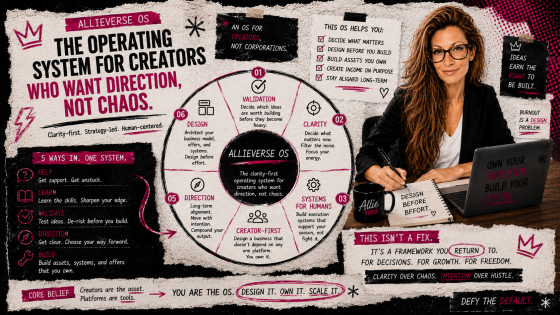
This post is part of the AllieVerse OS, a clarity-first operating system for creators who want direction instead of chaos.
The OS is made up of six core components that govern how decisions get made inside a creative business: Validation, Clarity, Systems for Humans, Creator-First, Direction, and Design.
These are not steps to complete. They are flexible components that work together to support how decisions get made across your business.
You can explore a quick overview of the full system here, or read the in-depth breakdown of every component here.
This post focuses on the Validation component, and what changes when ideas are tested before they become heavy.
The 6 Core Components
- Validation – Ideas earn the right to be built.
- Clarity – Thinking beats hustling.
- Systems for Humans – Systems are creative tools, not cages.
- Creator-First – The creator is the asset. Platforms are tools.
- Direction – Consistency without direction is busywork in public.
- Design – Burnout happens when effort replaces design.
How Ideas Get Heavy Without You Noticing
At first, an idea is just an idea.
It’s flexible.
Easy to adjust.
Easy to walk away from.
But the moment you start building, something changes.
You invest time.
You make decisions.
You start shaping it into something real.
And that’s when the weight begins.
Each small step adds weight. Not logistical weight. Emotional weight.
Once an idea moves into continuation, that weight becomes harder to question.
Why It Becomes Hard to Let Go
By the time you realize something isn’t working, you’ve already invested.
Time.
Energy.
Attention.
Walking away no longer feels neutral.
It feels like wasted effort.
Like starting over.
Like failure.
So instead of stepping back, you push forward.
Not because it’s the right decision.
Because it’s the easiest one emotionally.
What Validation Actually Means (In the AllieVerse OS)
Validation is not about killing creativity.
It’s not about overthinking.
And it’s definitely not about refusing to act.
Validation is about giving ideas a chance to earn their weight before they demand loyalty.
It keeps ideas light before continuation turns them into commitments.
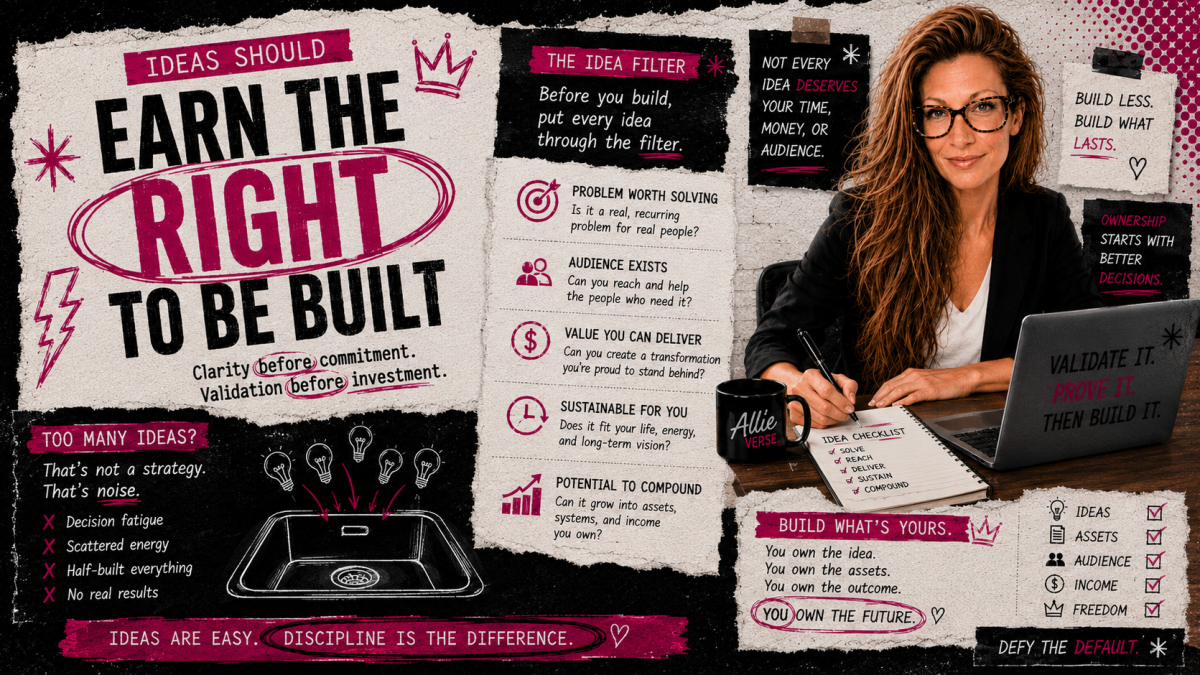
It asks simple, grounding questions:
- Does this solve a real problem someone actually feels?
- Has anyone signaled they want this, not just that they like the idea of it?
- Is there evidence this idea can support the outcome you want from your business?
Why This Component Matters
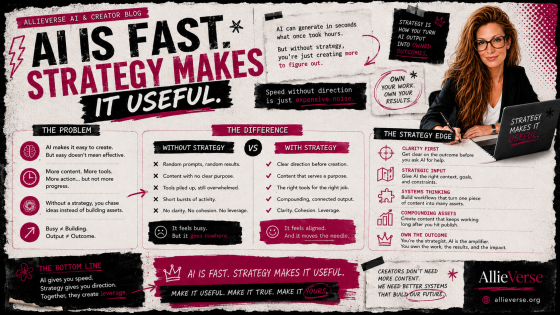
Without validation, creators build first and question later.
They follow excitement.
They follow momentum.
They follow what feels like a good idea.
But good ideas are not the same as good decisions.
The Validation component exists to create space between idea and investment.
So you can choose what to build before it becomes difficult to walk away.
What Changes When Validation Comes First
When validation comes first, ideas stay lighter longer.
You test before you build.
You question before you commit.
You gather signal before you invest.
Which means fewer things become heavy in the first place.
You’re not constantly trying to untangle yourself from things you already built.
You’re choosing more intentionally from the start.
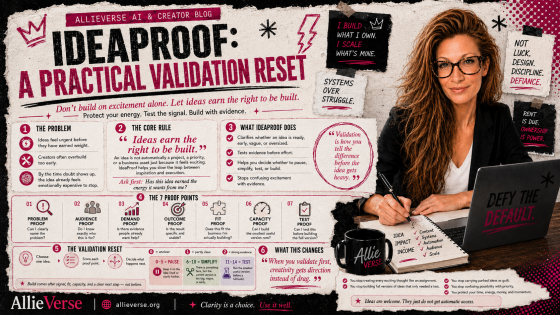
The Core Rule: Ideas Earn the Right to Be Built
Here’s the rule the Validation component is built on:
Ideas earn the right to be built.
Excitement is not enough.
Evidence matters.
The goal isn’t to eliminate risk.
It’s to avoid carrying the wrong things forward.
Test Before You Build
If you’re constantly building things that don’t go anywhere, that’s not a creativity problem.
It’s a validation problem.
You don’t need more ideas.
You need a way to test which ones deserve to move forward.
I created the IdeaProof Workbook to help you validate ideas before they become heavy.
Start Here
If you want the full system context, start with the OS pillar.
Read the AllieVerse OS pillar post
Then use IdeaProof to validate your ideas before they turn into commitments.
Categories: : Validation